The information provided on this website is intended for general informational purposes only. It does not constitute definitive treatment advice. For any questions or issues related to pain management, it is crucial to consult a medical professional. A thorough evaluation is essential for an accurate diagnosis and treatment plan.
×
On This Page
Arthritis and joint pain treatment at Pain Physicians NY combines advanced non-surgical and minimally invasive treatments, including joint injections, regenerative medicine, nerve blocks, and radiofrequency ablation (RFA), to help reduce pain, improve mobility, and support long-term joint function. Led by Dr. Leon Reyfman, a Harvard-trained board-certified pain management specialist with more than 25 years of experience, our team creates personalized, comprehensive treatment plans designed to help patients stay active and avoid surgery whenever possible.
Arthritis is a condition that causes inflammation and degeneration in one or more joints, leading to pain, stiffness, swelling, and reduced range of motion. It can develop gradually over time or appear after an injury, and symptoms often worsen with age or ongoing wear and tear on the joints.
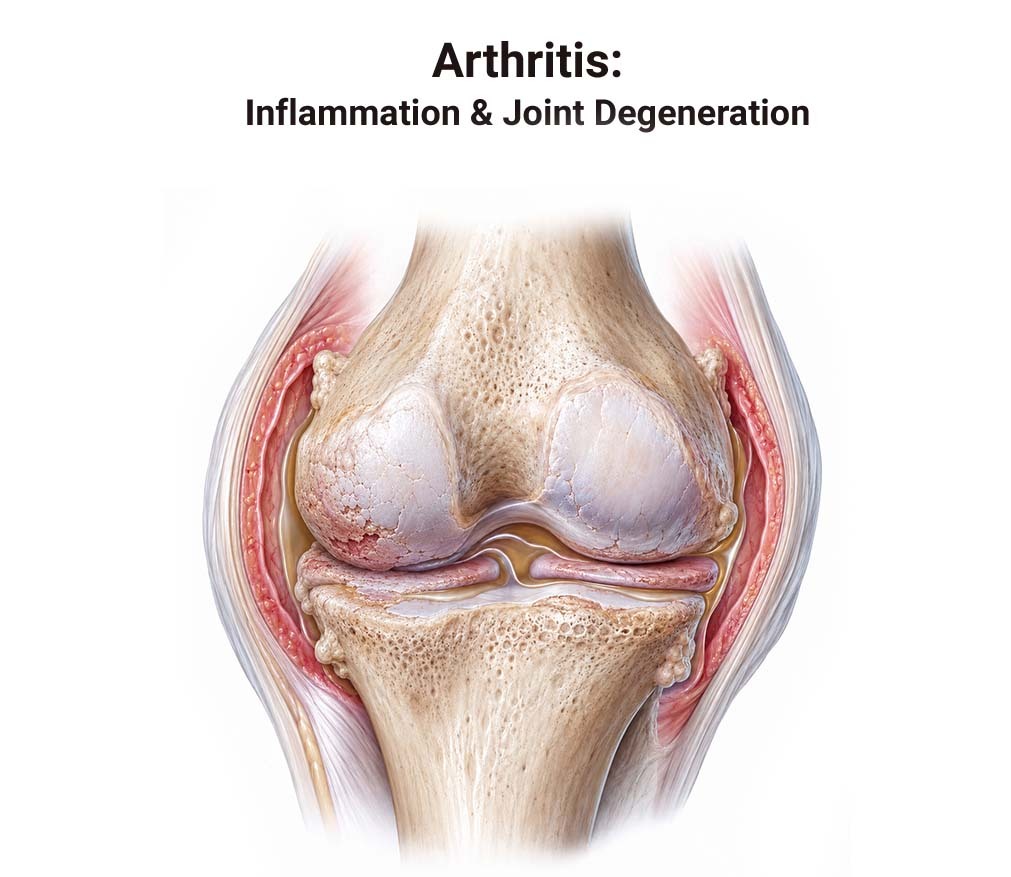
Dr. Reyfman and his team evaluates and treats several common forms of arthritis, focusing on reducing pain and improving joint function regardless of the underlying cause.
This includes:
Each type of arthritis can affect the body differently, so our team at Pain Physicians NY always tailors the treatment to the patient’s specific condition, symptoms, and long-term mobility goals.
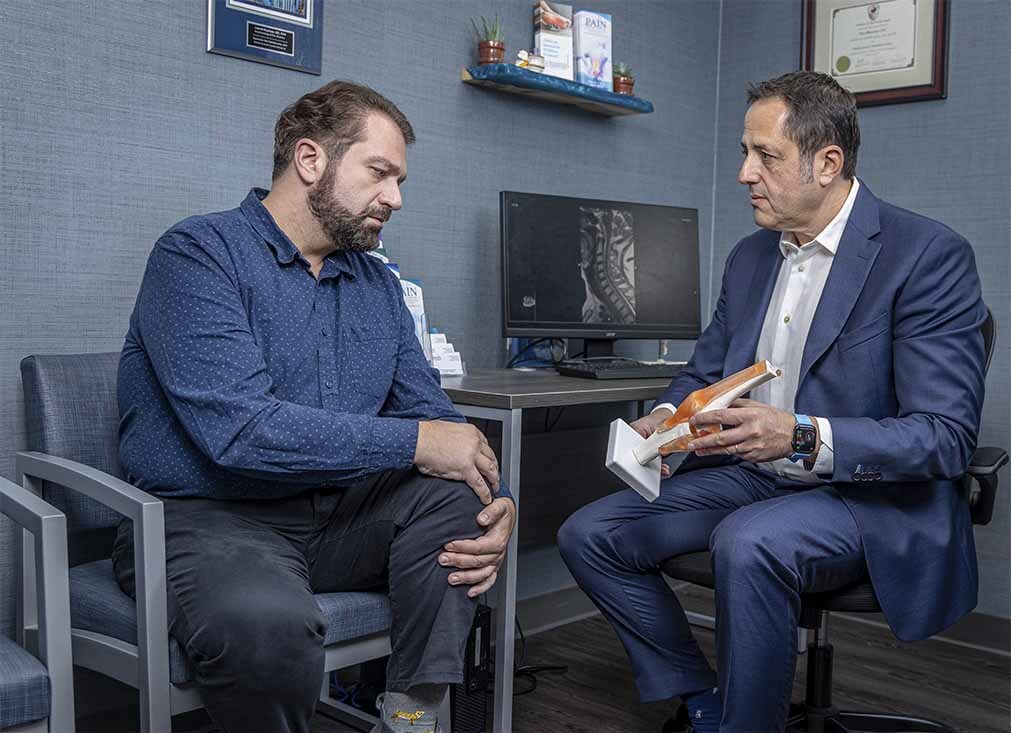
Arthritis and joint pain can affect almost any area of the body, and our team focuses on identifying the exact source of discomfort to guide treatment.
We commonly treat pain in the following joints:
Because joint pain often overlaps between nearby areas, a careful evaluation helps us pinpoint the underlying cause and choose the most effective treatment approach for each patient.
Our team begins with a detailed consultation focused on understanding your symptoms, medical history, and how joint pain is affecting your daily life. This is followed by a physical examination to assess joint movement, tenderness, swelling, and range of motion.
When needed, we may use diagnostic imaging such as X-rays, ultrasound, or MRI, along with laboratory testing, to better identify the type and severity of arthritis. Once all information is reviewed, we create a personalized treatment plan focused on reducing pain, improving function, and slowing disease progression.
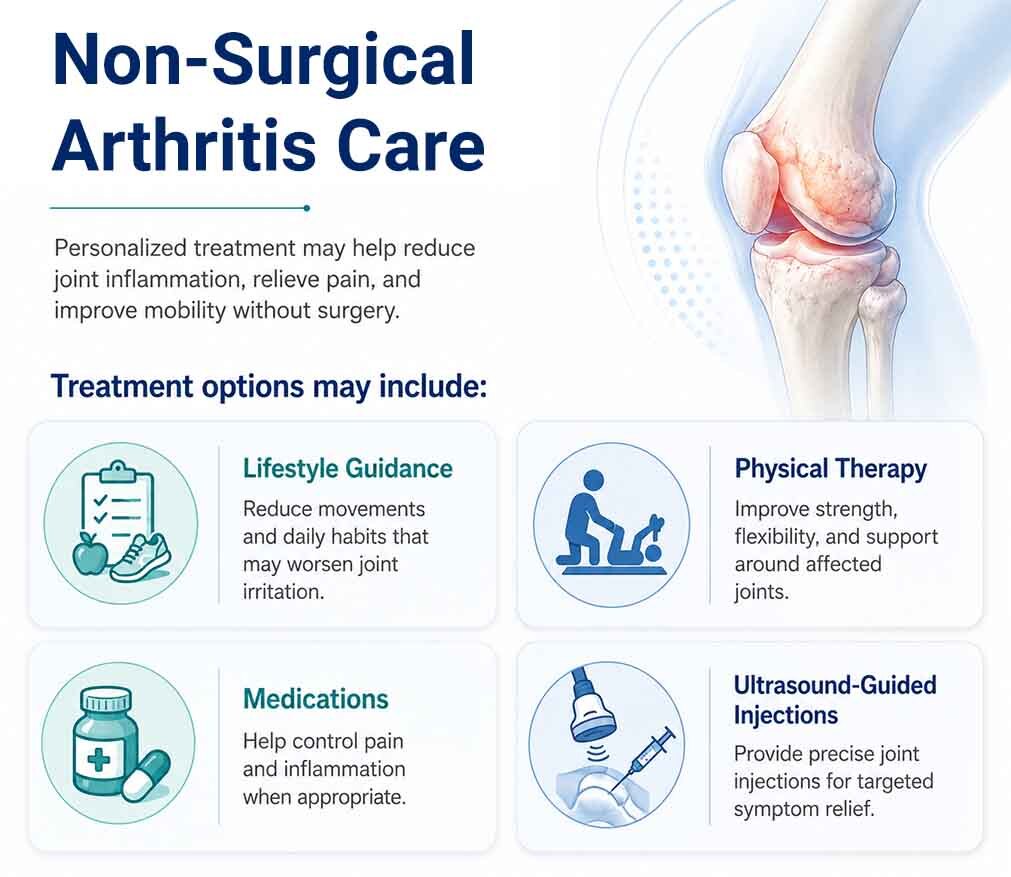
Our approach to arthritis care starts with conservative, non-surgical treatments designed to reduce inflammation, relieve pain, and improve joint movement. Treatment is personalized and may include a combination of the options below depending on each patient’s condition.
These treatments are often the first step in care and can provide significant improvement in comfort and function without the need for surgery.
For patients with ongoing joint pain or limited response to conservative care, regenerative treatments may be used to support the body’s natural healing response and improve joint function over time. These therapies are minimally invasive and may include biologic injections that target inflammation and support tissue repair at the joint level.
These regenerative options are often considered when patients need additional support beyond standard treatments, with the goal of improving joint function and slowing further degeneration when possible.
When pain continues to interfere with daily life, our doctors may recommend advanced interventional treatments that provide additional relief beyond standard non-surgical care. These options are selected based on the source of pain, the affected joint, and each patient’s response to previous treatments.
These treatments are often considered when conservative therapies no longer provide sufficient relief, helping patients manage symptoms while delaying or avoiding surgery whenever possible.
Minimally invasive arthritis treatments are designed to ease pain and improve movement without surgery or long recovery periods. They focus directly on the source of pain, which often means quicker relief, less disruption to daily life, and a reduced need for long-term medication. For many patients, these options make it easier to stay active and maintain a better quality of life while managing arthritis symptoms.
Dr. Leon Reyfman is a board-certified pain management specialist with more than 25 years of experience treating joint, nerve, and spine conditions. He completed advanced training in anesthesiology and interventional pain medicine and is known for minimally invasive, image-guided treatments designed to improve function and reduce pain without unnecessary surgery.
Here’s what sets Dr. Reyfman apart:
Dr. Reyfman and his team of pain management specialists focus on helping patients restore mobility and improve quality of life through carefully planned, personalized, evidence-based arthritis treatment plans.
At Pain Physicians NY, Dr. Reyfman and his team guide your care step by step so you know what to expect at every stage, from your first visit through treatment and follow-up.
We begin with a focused consultation to understand your symptoms, how long they’ve been present, and how they are affecting your daily movement and comfort.
If needed, imaging or other testing is used to better understand the condition of the joint and identify the source of pain more precisely.
Based on the findings, a tailored plan is created that may include non-surgical, interventional, or regenerative options depending on your condition and goals.
Your progress is monitored over time, and treatment is adjusted when necessary to support steady improvement and long-term function.
This structured approach at Pain Physicians NY helps keep care practical, focused, and adapted to how each patient responds, with Dr. Reyfman overseeing every stage of care.
If you’re struggling with arthritis or ongoing joint pain, Dr. Reyfman and his team at Pain Physicians NY can help you find relief through personalized, non-surgical, and advanced treatment options. We serve patients across New York City, including Manhattan, Brooklyn, Queens, and the Bronx. Contact Pain Physicians NY to schedule a consultation and learn what treatment options may be right for you.
Yes. Many patients improve with non-surgical treatments such as physical therapy, medications, joint injections, regenerative medicine, and image-guided procedures. At Pain Physicians NY, Dr. Reyfman and his team focus on these options first whenever appropriate to help reduce pain, improve mobility, and delay or avoid surgery.
Cortisone injections reduce inflammation for short-term pain relief, while PRP uses your own blood components to support longer-term tissue healing.
Ultrasound guidance allows injections to be placed in real time, helping ensure the medication reaches the exact area causing pain.
Patients with chronic knee arthritis pain who have not improved with conservative treatments may be candidates. Dr. Reyfman and his team carefully evaluate each case to determine if these procedures are appropriate.
In most cases, PRP therapy is not covered by insurance and is considered an out-of-pocket treatment. Our team reviews all costs with you before starting care.
Relief from radiofrequency ablation can last several months to over a year, depending on the individual and the severity of arthritis. Results vary, and some patients may need repeat treatment over time.
Yes. Dr. Reyfman and his team also treat patients after joint replacement surgery for ongoing or residual pain, using targeted non-surgical options when appropriate.
We strive to see patients as soon as possible at times that fit their schedule, so everyone can receive comprehensive care that is not rushed. Urgent cases are prioritized whenever possible. Contact Pain Physicians NY to check current availability and schedule your visit.
Pain Management Brooklyn
2279 Coney Island Ave, Brooklyn, NY 11223
(718) 998 – 9890