The information provided on this website is intended for general informational purposes only. It does not constitute definitive treatment advice. For any questions or issues related to pain management, it is crucial to consult a medical professional. A thorough evaluation is essential for an accurate diagnosis and treatment plan.
×
On This Page
Persistent shoulder arthritis can make lifting, reaching, and even sleeping uncomfortable. At Pain Physicians NY, experienced board-certified pain management specialists diagnose the source of joint pain and create personalized treatment plans using advanced imaging, guided injections, physical therapy, anti-inflammatory treatments, and minimally invasive procedures when appropriate. By reducing inflammation and improving joint mobility, treatment can help patients move more comfortably and return to daily activities with less pain. Schedule an evaluation to learn which shoulder arthritis treatment options may be right for you.
Several forms of arthritis can affect the shoulder joint. The condition develops when cartilage breaks down, inflammation increases, or previous injuries damage the joint surfaces.
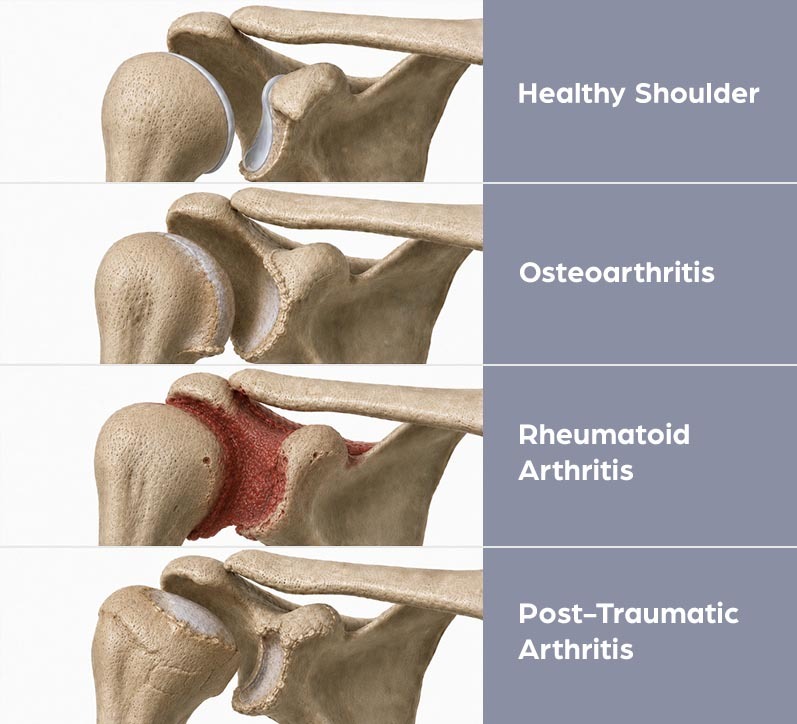
The most common types include:
Osteoarthritis is the most common age-related form of arthritis affecting the shoulder. It develops slowly as the cartilage cushioning the joint wears away over time. As the protective cartilage thins, bones begin rubbing together, leading to pain, stiffness, grinding sensations, and reduced mobility. Patients often notice symptoms worsening with activity and improving with rest.
Rheumatoid arthritis in the shoulder is an autoimmune condition where the immune system attacks the joint lining, causing chronic inflammation. Unlike osteoarthritis, rheumatoid arthritis can affect multiple joints throughout the body at the same time. Patients may experience swelling, warmth, stiffness, fatigue, and progressive joint damage if the condition is left untreated.
Post-traumatic arthritis develops after a previous shoulder injury such as a fracture, dislocation, or rotator cuff damage. Even after the original injury heals, the joint may gradually deteriorate over time due to uneven cartilage wear and instability. Symptoms can appear months or even years after the initial trauma.
The severity of symptoms can vary depending on the stage of arthritis and the amount of joint damage present.
Common shoulder arthritis symptoms may include:
Many patients also experience arthritis shoulder pain that gradually becomes more constant over time, especially during physical activity or changes in weather.
Diagnosing arthritis begins with a detailed physical examination and review of the patient’s symptoms, medical history, and prior injuries. During the evaluation, the physician checks shoulder strength, range of motion, joint stability, and areas of tenderness.
Imaging studies are often used to confirm the diagnosis and determine the severity of joint damage. X-rays can show cartilage loss, bone spurs, and narrowing of the joint space. In some cases, MRI or ultrasound imaging may be recommended to evaluate surrounding soft tissues such as tendons, ligaments, and cartilage.
An accurate diagnosis helps determine the most effective treatment plan and whether conservative therapies or advanced interventions may be needed.
Treatment depends on the severity of symptoms, the degree of joint degeneration, and the patient’s activity level. The goal is to reduce inflammation, relieve pain, improve mobility, and restore daily function.
Conservative treatment options may include:
For patients with severe shoulder arthritis pain that does not improve with conservative care, surgical options such as shoulder replacement may sometimes be considered. However, many patients can successfully manage symptoms with non-surgical treatment and long-term joint care.
If ongoing shoulder stiffness, weakness, or pain is interfering with your daily life, early evaluation can help identify the cause and prevent further joint deterioration. At Pain Physicians NY, our team provides comprehensive care for patients dealing with shoulder arthritis, focusing on accurate diagnosis, personalized treatment, and long-term pain relief to help restore comfort and mobility.
Pain Management Brooklyn
2279 Coney Island Ave, Brooklyn, NY 11223
(718) 998 – 9890